


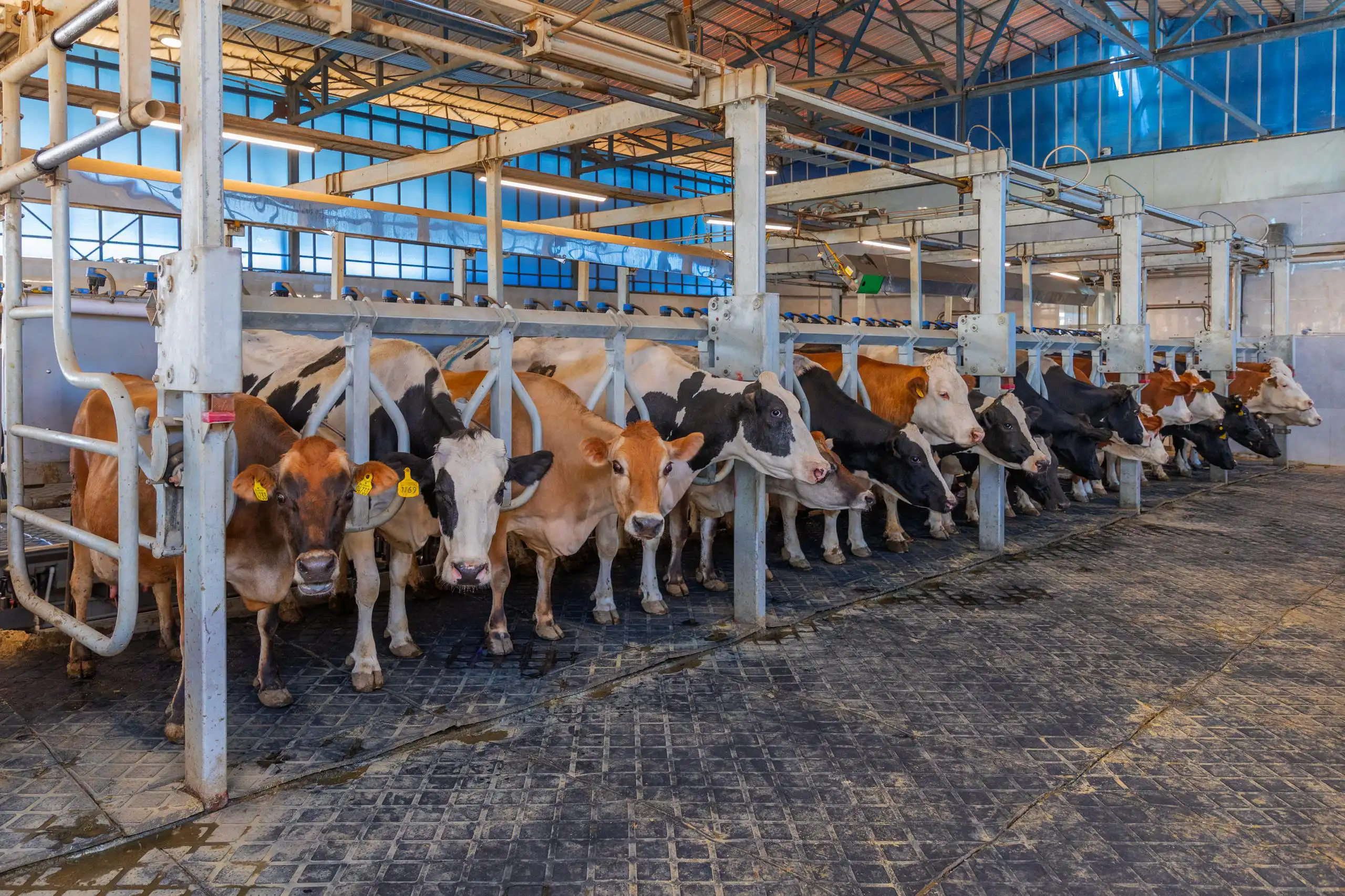
Can you really produce 20 calves from one cow in a single year? Under natural conditions, a female cow usually gives birth to only a limited number of calves per year, because the intervals between pregnancy, calving, and reproductive cycles limit the number of offspring.
However, modern animal reproductive technologies have significantly reduced this limitation. Methods such as OPU, in vitro embryo production (IVF), and embryo transfer allow specialists to make more extensive use of the genetic and reproductive potential of elite cows.
According to Dr. Mohammad Mehdi Naderi, CEO of Sina Fanavaran Mandegar, specialists can use these technologies to produce a large number of embryos from an elite female cow over the course of one year. If some of these embryos result in successful pregnancies after being transferred to recipient cows, the number of calves born can reach approximately 20 calves per year.
But how is this figure calculated? Is it really possible to produce 20 calves from one cow? In the following sections, we will examine the stages of embryo production, embryo transfer, and the factors that affect the number of calves obtained.
Is It Really Possible to Produce 20 Calves from One Cow in a Year?
The answer to this question lies in the difference between embryo production and calf births.
A female cow cannot naturally give birth 20 times in a year. Therefore, producing 20 calves from one cow does not mean that the same cow carries and develops all of these calves in her own uterus.
In embryo transfer technology, specialists use an elite female cow as a source of oocytes and maternal genetics. The resulting embryos are then produced under laboratory conditions and transferred into the uterus of recipient cows.
In this way, an elite cow can pass on its genetics to a much larger number of calves without having to undergo a full pregnancy for each calf.
Important note: The figure of 20 calves is an estimate based on the number of embryos produced and the success rate of embryo transfer. It should not be considered a guaranteed result for every cow or every farm.
How Does OPU Technology Increase the Number of Embryos Produced?
One of the key technologies in this process is OPU, or Ovum Pick-Up.
In this method, specialists collect oocytes from the ovaries of an elite female cow. The laboratory then prepares these oocytes for the subsequent stages.
Next, specialists use suitable sperm to carry out fertilization, and the resulting embryos are placed under controlled conditions for further development.
The main advantage of this method is that the farmer can utilize the genetic potential of an elite cow more than once a year. This is what creates a significant difference between traditional methods and modern reproductive technologies.
The Role of IVF in Bovine Embryo Production
After the oocytes are collected, the stage of in vitro fertilization or IVF becomes important.
In this process, specialists place the oocytes and sperm together in a laboratory environment so that fertilization can take place. The resulting embryos then develop for several days under controlled conditions.
The purpose of this stage is to produce embryos that meet the necessary conditions for transfer to a recipient cow.
Therefore, IVF technology allows specialists to use the oocyte of an elite female cow and the sperm of a selected male to produce embryos with the desired genetic value.
From 50 Embryos to 20 Calves: How Is This Calculation Made?
One of the important points in Dr. Naderi’s explanations is the difference between the number of embryos produced and the number of calves born.
According to the explanations provided, an elite female cow can produce an average of around 50 embryos per year. However, producing 50 embryos does not mean that 50 calves will be born.
After the embryos are produced, specialists transfer them to recipient cows. At this stage, the implantation rate or pregnancy success rate plays a decisive role.
If we assume an implantation rate of around 40%, the calculation is simple:
50 embryos × 40% = 20 successful pregnancies
Therefore, in this scenario, it is possible to reach an approximate figure of 20 calves from one elite cow in one year.
Of course, the implantation rate depends on various factors under real-world conditions, and this figure cannot be considered constant for all animals and all conditions.
What Role Does the Recipient Cow Play in Embryo Transfer?
In this model, the elite cow primarily serves as a genetic source. On the other hand, the recipient cow is responsible for carrying and developing the embryo until birth.
For successful embryo transfer, the reproductive condition of the recipient cow is very important. The timing of the estrous cycle, uterine condition, nutritional status, and overall health of the animal can affect the outcome of the transfer.
Therefore, even if the laboratory produces a large number of high-quality embryos, proper management of recipient cows remains highly important.
In fact, the success of this technology depends on the coordination of several factors: the genetic quality of the parents, embryo quality, laboratory performance, selection of the recipient cow, and proper management after transfer.
Why Is Embryo Transfer Important for Genetic Improvement?
The main goal of this technology is not simply to increase the number of calves. Accelerating the transfer of desirable genetics within the herd is one of its most important applications.
Suppose a female cow has desirable genetic traits such as high milk production, good health, or greater longevity. With traditional methods, this cow produces only a limited number of offspring during each reproductive cycle.
Embryo production and transfer technology allows the genetics of such an animal to be used more extensively. As a result, the farmer can introduce more offspring from an elite animal into the herd in a shorter period.
Accelerating Genetic Improvement
Genetic improvement is a time-consuming process. With conventional methods, the transfer of desirable traits to future generations remains dependent on reproductive cycles and the time required for animals to mature.
The use of OPU, IVF, and embryo transfer can increase the number of offspring produced from elite animals. As a result, farmers have greater opportunities to spread desirable traits more rapidly throughout the herd population.
Increasing the Genetic Value of the Herd
A herd has greater genetic value when desirable traits are present in a larger number of its animals.
If a farmer uses elite female cows and males with high genetic value, embryo transfer technology can accelerate the spread of this genetic combination.
However, the final result depends on parent selection, embryo quality, and herd management, and the technology alone does not guarantee genetic quality.
Better Use of Elite Female Cows
Under natural conditions, the reproductive capacity of a female cow has clear limitations. OPU technology allows specialists to collect oocytes from the animal’s ovaries at different intervals and use them to produce embryos.
In this way, the farmer can make use of the genetic value of an elite cow on a much larger scale.
What Factors Affect the Number of Calves Produced?
The figure of 20 calves does not depend on a single factor. Several stages must be successfully completed one after another.
The number of usable oocytes is one of the important factors. Oocyte quality can affect the ability to produce suitable embryos.
On the other hand, sperm quality and the selection of an appropriate male are also important. The genetic combination of the parents determines the desired characteristics of the next generation.
The next stage is the quality of the embryos produced in the laboratory. The embryos must meet suitable conditions for transfer.
Finally, the condition of the recipient cow and the embryo implantation rate affect the number of successful pregnancies.
Therefore, any change in one of these stages can increase or decrease the final number of calves.
Is It Possible to Produce 20 Calves from Every Cow?
The figure of 20 should not be considered a fixed result for all cows.
This number is based on a specific scenario: producing approximately 50 embryos per year and achieving an approximately 40% implantation rate.
In practice, the number of embryos produced and the success rate of transfer can vary between cows, embryo production centers, and different management conditions.
Therefore, a more accurate statement is that embryo production and transfer technology, under suitable conditions, can make it possible to produce a significantly larger number of calves from an elite female cow.
Economic Benefits of Multiplying the Genetics of Elite Cows
For an industrial livestock operation, the value of this technology is not limited to the number of calves. Increasing the speed of transferring desirable genetics can also affect the structure of the herd in the long term.
If a farmer can spread desirable economic traits throughout the herd more quickly, future costs associated with the low performance of undesirable animals may potentially be reduced.
On the other hand, producing more offspring from an elite cow allows for better use of genetic investment.
However, economic profitability should be calculated based on the costs of embryo production, transfer, maintaining recipient cows, success rates, and the economic value of the calves. Therefore, a fixed level of profit cannot be determined for all farms.
Difference Between the Traditional Method and Embryo Production and Transfer Technology
With traditional methods, the number of offspring that a female cow can produce throughout her lifetime is limited. Pregnancy and calving also have specific time intervals.
In contrast, embryo production technology takes advantage of the fact that the elite cow serves as a genetic source, while recipient cows carry the resulting embryos until birth.
This separation allows an elite female cow to pass on its genetics to a larger number of offspring.
| Feature | Traditional Method | Embryo Production and Transfer |
|---|---|---|
| Use of elite cow genetics | More limited | More extensive |
| Number of offspring from an elite female | Limited | Greater |
| Need for a recipient cow | No | Yes |
| Use of a laboratory | No | Yes |
| Speed of genetic multiplication | Normal | Higher |
| Dependence on reproductive management | High | Very high |
Conclusion: Can One Cow Have 20 Calves in a Year?
If this expression refers to natural births by the same cow, the answer is no. However, modern reproductive technologies have changed the way this issue is approached.
Using OPU, IVF, embryo production, and embryo transfer, specialists can produce a large number of embryos from one elite female cow and transfer them to recipient cows.
According to the scenario presented in the explanations of Dr. Mohammad Mehdi Naderi, producing approximately 50 embryos per year with an implantation rate of around 40% could result in approximately 20 calves.
Of course, this figure is an estimate that depends on the conditions of embryo production and transfer, and the actual result may vary.
The main importance of this technology lies elsewhere: faster multiplication of superior genetics and shortening the path to genetic improvement of the herd. For this reason, embryo production and transfer is considered one of the important technologies in the modernization of reproduction and genetic improvement of dairy cattle.
Frequently Asked Questions
Can one cow really give birth to 20 calves in a year?
No. A cow cannot naturally give birth 20 times in a year. The figure refers to producing approximately 20 calves from the genetics of one elite female cow through embryo production and transfer.
How many embryos are needed to produce 20 calves?
In the scenario discussed, approximately 50 embryos and an implantation rate of around 40% are assumed. This calculation results in approximately 20 successful pregnancies.
What is OPU in bovine embryo production?
OPU is a method for collecting oocytes from the ovaries of a female cow. After collecting the oocytes, specialists can use them to produce embryos under laboratory conditions.
What role does IVF play in bovine embryo production?
In IVF, specialists place oocytes and sperm together in a laboratory environment to facilitate fertilization. After the resulting embryo undergoes its initial stages of development, its suitability for transfer is assessed.
Is the embryo implantation rate always 40%?
No. The implantation rate depends on various factors such as embryo quality, uterine condition, timing of transfer, recipient cow condition, and reproductive management. The 40% figure in this article is presented as a calculation scenario based on the explanations provided.
Leave a Reply