


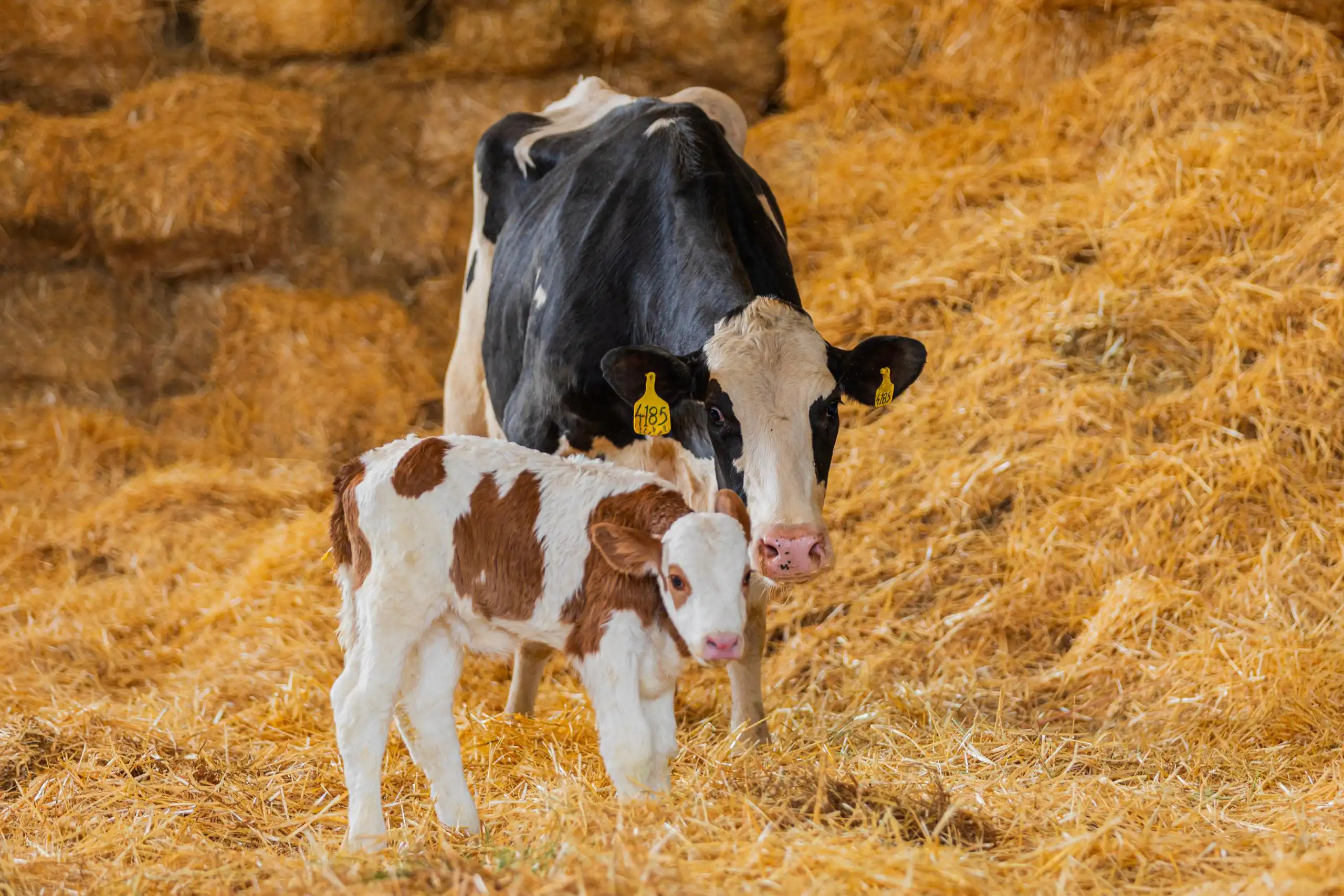
A detailed comparison of embryo transfer and artificial insemination in cattle shows that although both technologies are used to improve the reproductive efficiency and genetic improvement of herds, they have fundamental differences in terms of genetic access, physiological mechanism, and return on investment. While artificial insemination provides the farmer with control over only 50% of the inheritance equation (the paternal contribution), embryo transfer simultaneously utilizes the superior genetic potential of both the maternal and paternal sides, creating a significant leap in reducing genetic lag, improving fertility under heat stress, and achieving sustainable economic efficiency on the farm.
The dairy and beef cattle industry in the third millennium has evolved from a traditional agricultural activity into a biotechnology-driven and data-driven industry. Profit margins in cattle farming operations are becoming increasingly narrow; soaring costs of feed, veterinary care, and labor, along with climate-related challenges such as severe heat stress, leave little room for decision-making based on guesswork. In such an environment, the two key levers determining herd survival and profitability are reproductive efficiency and the rate of genetic progress.
The two fundamental technologies that have shaped the roadmap of herd reproduction are Artificial Insemination (AI) and Embryo Transfer (ET). Although both technologies have been known worldwide for decades, a significant proportion of farm managers still have economic doubts about the strategic advantages of embryo transfer compared with artificial insemination.
According to the scientific interpretation of Dr. Mohammad-Mahdi Naderi, the major gap and strategic error in traditional livestock farming systems is that farm managers spend their entire genetic budget for years on purchasing the most expensive semen from superior sires, while half of the herd’s genetic investment and potential—that is, maternal genetics—remains completely unused and passive within the production cycle.
In this specialized article, drawing on the latest research findings and technical analyses, we examine all comparative aspects of embryo transfer and artificial insemination from the perspectives of physiology, laboratory techniques, genomic evaluation, fertility rates, and economic cost-benefit analysis.
1. Physiological Basis and Anatomical Description of the Mechanism of Action of Each Technology
To understand the fundamental differences between these two approaches, it is first necessary to examine the biological cycle and clinical sequence of actions of each one, from initiation to the stage of embryo implantation in the uterus.
Artificial Insemination (AI): Mechanism, Potential, and Limitations
Artificial insemination is the oldest and most widespread reproductive biotechnology in industrial livestock farming. In this method:
- Semen is collected from superior bulls with a proven pedigree (Progeny Tested) or genomic evaluations, then diluted, qualitatively assessed, and frozen in liquid nitrogen at −196°C.
- The female cattle is monitored based on visible signs of estrus, activity-monitoring tools (pedometers and neck sensors), or ovulation synchronization protocols such as Ovsynch or Double-Ovsynch.
- An artificial insemination gun (AI Gun) is passed through the cervix, and the thawed sperm suspension is deposited into the uterine body.
In artificial insemination, the internal physiology of the female cow plays the primary role in ovulation, transport of the oocyte into the oviduct, fertilization by sperm, early mitotic divisions, and the descent of the morula and blastocyst into the uterine horn.
However, fluctuations in hormone levels, subclinical endometrial inflammation, or environmental stressors can disrupt the normal progression of these stages. Under such conditions, the probability of reproductive failure increases, and Early Embryonic Death may occur before day 14.
On the other hand, the genetics resulting from this process are under the control of only 50% of the paternal contribution. The remaining 50% depends on the genetics and quality of the female’s oocyte; therefore, the genetic merit of the female cow also plays an important role in determining the characteristics of the resulting offspring.
In artificial insemination, ovulation and the transport of the oocyte into the oviduct are among the early stages of the process. This is followed by fertilization by sperm, early mitotic divisions, and the transport of the morula and blastocyst to the uterine horn.
All of these stages depend on the internal physiology of the female cow. Any disruption in the normal function of the reproductive system can affect the process of embryo formation and establishment.
For example, hormonal fluctuations, subclinical endometrial inflammation, and environmental stressors may disrupt these stages. As a result, the likelihood of reproductive failure increases, and Early Embryonic Death may occur before day 14.
Therefore, using semen with high genetic value alone does not guarantee a desirable outcome. The genetic quality and physiological status of the female cow must also be taken into consideration when evaluating the success of artificial insemination.
Embryo Transfer (ET): Mechanism, Technologies, and the MOET vs. IVF Dichotomy
In embryo transfer, the goal is not simply to deliver sperm to the oocyte; rather, it is to create, select, and directly transfer a fully developed embryo at the blastocyst stage (6.5 to 7.5 days after fertilization) into the uterus of a recipient cow. This process is implemented through two technological pathways:
1. In-vivo Embryo Transfer (In-vivo / MOET)
- Superovulation: An elite female cow (Donor) with the highest indices for conformation, production, and milk composition is treated with decreasing doses of follicle-stimulating hormone (FSH) to stimulate the ovaries to release between 10 and 25 fertilizable follicles, rather than a single oocyte.
- Repeated Insemination: During estrus, the donor female is inseminated with multiple doses of superior semen to achieve the highest possible fertilization rate among the available follicles.
- Uterine Flushing: On the seventh day after insemination, embryos are recovered non-surgically from the uterine horns using a two- or three-way Foley catheter and a buffered flushing solution, typically protein-enriched PBS.
- Evaluation and Grading: Embryos are examined under a stereomicroscope and classified according to the guidelines of the International Embryo Technology Society (IETS) into Grades 1 (excellent), 2 (good), 3 (fair), and 4 (degenerate or non-transferable).
2. In Vitro Embryo Production (IVP / IVF)
- Ovum Pick-Up (OPU): With the aid of a transvaginal ultrasound probe equipped with a biopsy needle, the antral follicles of the female cow’s ovaries are aspirated without the need for intensive hormonal treatments. This procedure can even be performed in 6-month-old heifers or in pregnant cows up to the third month of gestation. OPU is a key component of in vitro embryo production and can be performed in young and pregnant females.
- In Vitro Maturation (IVM): Cumulus-oocyte complexes (COCs) are matured for 22 to 24 hours in an incubator under controlled temperature and gas conditions, allowing them to achieve nuclear and cytoplasmic maturation.
- In Vitro Fertilization (IVF): Capacitated sperm are incubated with mature oocytes for 18 hours. At this stage, sexed semen can be used to produce embryos with a targeted sex, such as female heifers. Sex-sorted sperm can be used in bovine IVP to produce female embryos.
- In Vitro Culture (IVC): Specialists culture the resulting zygotes for 6 to 7 days under controlled conditions until the embryos reach the compact morula or expanded blastocyst stage.
The resulting embryos are either transferred fresh directly into the ipsilateral uterine horn of the recipient cow, corresponding to the side bearing the corpus luteum, or stored in liquid nitrogen for future use using conventional slow-freezing methods or vitrification. Both slow-freezing and vitrification are established cryopreservation approaches for bovine embryos.
2. Analysis of Dr. Mohammad-Mahdi Naderi’s Expert Perspective: Unlocking Maternal Genetic Potential
In analyzing the statements of Dr. Mohammad-Mahdi Naderi regarding the comparison of these two methods, one key structural point stands out: the routine accounting calculations of farms often overlook asymmetric investment in half of the genetic equation.
Even the use of the world’s most outstanding sires with the highest lifetime profitability figures does not mean that all desirable traits will be passed on to the next generation. In the artificial insemination process, the resulting embryo receives half of its genome from the dam; a dam that may have undesirable heritable characteristics in traits such as resistance to lameness, somatic cell count, or production level.
On the other hand, an AI-based system can partially dilute the gains achieved through superior semen due to its combination with average-quality females.
Dr. Naderi emphasizes that an industrial livestock producer has invested in selecting or purchasing the foundation females of the herd just as much as they have invested in constructing housing facilities, equipping the milking system, and formulating feed rations. If a 2,000-head farm has 50 cows with exceptional milk production, regular fertility, stable metabolism, and no history of clinical disease, under an AI system these females will ultimately produce only 5 or 6 calves over their productive lifetime (with approximately half of those calves expected to be male). With embryo transfer, however, this physical limitation can be overcome:
Embryo transfer makes it possible for ordinary and even lower-performing cows in the herd to serve as recipients for embryos from the most elite genetics; in this way, the 50% maternal genetic potential that remained constrained for years under traditional systems can be unlocked on an industrial scale.
3. Technical and Biological Comparison Table of the Two Methods
| Category | Evaluation Criterion | Artificial Insemination (AI) | In-vivo Embryo Transfer (MOET) | In-vitro Embryo Transfer (OPU-IVF) |
|---|---|---|---|---|
| Genetics and Reproduction | Controlled share of pedigree | ⚠️ 50% (paternal only) | 100% (paternal and maternal) | 100% (paternal and maternal) |
| Annual offspring production from an elite female | 1 offspring (if successful) | 15 to 30 offspring | 50 to 100+ offspring (maximum efficiency) | |
| Rate of herd genetic progress | Basic and gradual (over several generations) | Fast (2 to 3 times AI) | Very fast and accelerated (reduced generation interval) | |
| Physiology and Environmental Conditions | Site of fertilization | Fallopian tube (in vivo) | Donor’s fallopian tube | Laboratory culture vessels (in vitro) |
| Physiological requirement of the target animal | Requires regular estrus | Requires a hormonal response to superovulation | Flexible (can be performed in 6-month-old heifers and pregnant animals) | |
| Vulnerability to heat stress | 🔴 Very high (fertility decline below 20%) | 🟡 Moderate (dependent on donor respiration and temperature) | 🟢 Very low (transfer of a day-7 resilient embryo) | |
| Technical and Investment | Required equipment and expertise | AI gun and nitrogen container (general skills) | Ultrasound and flushing catheter (clinical skills) | OPU station, embryo laboratory, and specialized embryologist |
| Fertility rate under stable conditions | 35% to 45% | 50% to 60% (fresh embryos) | 55% to 65% (fresh) / 38% to 45% (frozen) | |
| Return on investment (ROI) horizon | Short-term / low input cost | Medium-term / added value from heifer sales |
4. Analysis of Genetic Progress and the Concept of “Genetic Lag”
One of the advanced concepts in quantitative genetics is Genetic Lag. Genetic lag refers to the time or value gap between the average genetic level of a commercial farm population and the reference genetic elite at breeding centers.
The rate of genetic progress for each trait follows the standard equation below:

where:
- i is the Selection Intensity.
- r is the Accuracy of Selection, or the accuracy of estimated breeding values.
- σ_g is the Genetic Standard Deviation of the population.
- L is the Generation Interval.
The difference between the two methods based on the variables in this equation is as follows:
- Selection intensity on the maternal pathway: In artificial insemination, because the farm must obtain calves from nearly all heifers and first-calf cows to maintain its milking capacity, selection intensity among dams is close to zero; in other words, every female, whether superior or inferior, must become a dam of the next generation. In embryo transfer, however, only 3 to 5% of the farm’s most elite females are selected as Donors, and the entire herd replacement population is propagated from this elite minority.
- Reducing the generation interval: With OPU-IVF performed on young heifers, the farmer does not need to wait until a heifer reaches calving age and full physical maturity; oocytes can be collected at 6 to 9 months of age, and embryos can be transferred to lower-value recipient cows. This can reduce the generation interval among females by at least half.
- Economic value of reducing the generation interval: Simulation studies indicate that the hidden cost associated with genetic lag in dairy herds can reach approximately $233 per cow per year. Combining female reproductive technologies with genomic selection can increase annual genetic gain by up to 76% to 81%.
5. Engineering Economics: Cost-Benefit Analysis and Herd Life-Cycle Value
The most common argument made by managers of traditional farms against adopting embryo transfer is: “A single artificial insemination service costs very little, while an in vitro-produced embryo or flushing procedure costs several times more; therefore, ET is not economically justified.” This argument is based on comparing input costs rather than comparing the value of the final product.
Comparative Breakdown of Costs and Return on Investment
- Value of the Resulting Heifer: A female calf born through AI carries randomly determined maternal genetics. If this heifer produces 35 kg of milk per day during her first lactation, while a heifer produced through embryo transfer, due to improved mammary structure, more efficient feed conversion, and superior maternal genetics, produces 43 kg of milk per day with higher milk fat and protein percentages, the difference in milk production over 3 to 4 productive lactations can offset the initial cost of the embryo within the first months of lactation.
- Cost Amortization Model for an Elite Animal: Maintaining an elite female cow on a farm involves a fixed cost. Suppose the annual maintenance and acquisition cost of a top-genetic cow is $1,500:
- AI scenario: This cow ultimately produces no more than 1 calf per year. Therefore, the financial burden of investing in this maternal genetics is $1,500 per calf.
- ET / IVF scenario: Using OPU or MOET, the same cow produces 30 calves over the course of a year. In this case, the per-calf share of the maintenance cost of the elite cow falls to $50. This is the precise concept of economies of scale in veterinary biotechnology.
- Additional Value from Selling Genetics Outside the Farm: A farm managed around embryo transfer can, after 3 years, transition from being a buyer of genetics to becoming an official seller of frozen embryos and registered heifers with verified pedigrees. At this stage, the farm’s revenue stream is no longer limited to commercial milk or slaughter beef; instead, the sale of each Grade 1 embryo at a high profit margin can become a valuable source of revenue.
6. Analysis of Heat Stress and the Physiological Advantage of Embryo Transfer
One of the major challenges facing modern cattle farming, particularly during the hot seasons, is the significant decline in fertility.
Why Does Artificial Insemination Decline During Summer?
When the Temperature-Humidity Index (THI) on the farm exceeds 68, dairy cows can begin experiencing heat stress. The consequences of this stress for the reproductive system include:
- Disruption of the secretion patterns of LH and progesterone
- Increased production of reactive oxygen species (ROS) in uterine and oviductal fluids
- Oocyte damage: The fertilized oocyte/early embryo is particularly vulnerable to elevated maternal body temperature during the first 1 to 5 days. This oxidative stress can contribute to apoptosis of embryonic cells and early embryonic death, resulting in substantial reductions in fertility during summer.
Embryo Rescue Strategy Through Embryo Transfer
By Day 7 after fertilization, the embryo reaches the compact or expanded blastocyst stage. At this stage, the embryo has undergone substantial biochemical and developmental progression and has acquired greater resistance to maternal heat stress. The embryo also develops stronger intercellular junctions that help maintain the structure of the blastocyst.
When, under heat-stress conditions, instead of performing artificial insemination on Day 0, the cow is left uninseminated and a 7-day-old embryo is transferred into the uterus of a recipient cow on Day 7:
- The critical embryonic phase during Days 1 to 5 within the oviduct of the heat-stressed cow is completely bypassed.
- The embryo can immediately initiate the biochemical signaling required for prevention of luteolysis through interferon-tau secretion, supporting maternal recognition of pregnancy. Studies have shown that under severe summer heat stress, pregnancy rates following embryo transfer can be substantially higher than those achieved through artificial insemination.
7. Clinical Protocols for Managing Recipient Herds
The success of an embryo transfer program does not depend solely on the quality of the in vitro-produced embryo or the expertise of the embryologist. Endometrial readiness and the physiological synchronization of the recipient cow’s uterus also play an important role in embryo acceptance and establishment, and together they constitute half of this equation.
A half-day error in synchronization between the donor and recipient can compromise maternal recognition of pregnancy and result in embryo loss. In commercial farms, precise hormonal protocols are used to synchronize the reproductive cycles of donors and recipients.
Structure of the Double-Ovsynch Protocol in Recipient Cows
This protocol is associated with highly consistent synchronization of the corpus luteum (CL) with embryo age:
- Day 0 (Presynchronization): The first GnRH injection is administered to reset the follicular wave.
- Day 7: An injection of prostaglandin (PGF₂α) is administered to induce regression of a potentially present corpus luteum.
- Day 10: A second GnRH injection is administered to induce controlled ovulation and initiate a synchronized follicular wave.
- Day 17 (Start of the main Ovsynch protocol): A third GnRH injection is administered.
- Day 24: Two doses of prostaglandin are administered 12 to 24 hours apart to ensure complete luteolysis.
- Day 26: The final GnRH injection is administered to induce precise ovulation within a defined time window.
- Day 33 (Day 7 after the presumed ovulation): Embryo transfer (ET Day).
Before inserting the transfer catheter, the specialized technician evaluates the quality of the corpus luteum (CL) using ultrasonography. The presence of a compact corpus luteum with a diameter greater than 20 mm and adequate blood flow in the same ovary on the side corresponding to the uterine horn receiving the embryo is considered an important criterion for successful transfer.
8. Comparative Table of Pregnancy Rates Under Different Clinical Conditions
| Reproductive Method | Type of Genetic Input | Herd Thermal Conditions | Average Pregnancy Rate at 60 Days | Clinical Analysis and Efficiency Status |
|---|---|---|---|---|
| Artificial Insemination (AI) | Conventional frozen semen | Thermal comfort (normal) | 41.5% to 44.2% | Commercial farm standard (5% decline) |
| Artificial Insemination (AI) | Sexed semen | Thermal comfort (normal) | 36.0% to 38.5% | 10% to 15% lower conception than conventional semen |
| Artificial Insemination (AI) | Conventional semen | 🔴 Severe heat stress (summer) | 16.8% to 24.5% | ⚠️ Critical: cost inefficiency and pregnancy loss of up to 12.7% |
| Embryo Transfer (MOET) | Fresh flushed embryo | 🟡 Severe heat stress (summer) | 34.1% to 38.7% | 🛡️ Fertility rescue: pregnancy rates reported at twice those of AI |
| Embryo Transfer (IVF) | Fresh OPU embryo | Stable and standard conditions | 58.2% to 62.4% | ⭐ Maximum efficiency and highest pregnancy rate |
| Embryo Transfer (IVF) | Vitrified embryo | Stable and standard conditions | 38.0% to 42.3% | Comparable to conventional AI while preserving 100% of maternal genetics |
9. Operational Steps and Decision-Making Matrix for Farm Managers
Moving away from 100% dependence on artificial insemination and implementing a combined breeding strategy requires a step-by-step approach:
- Step 1: Genomic Profiling of the Entire Herd: As a first step, all heifers and first-lactation cows are evaluated using validated genomic testing kits to reveal their true genetic merit without relying solely on the potential errors associated with phenotypic records. Genomic testing can improve the accuracy of selection and help identify genetically superior females at a young age.
- Step 2: Strategic Division of Animals into 3 Operational Tiers:
- Tier 1 (Top 5–10% of the herd): This group represents the farm’s genetic elite. Their reproductive capacity should be directed toward genetic multiplication rather than used solely for producing individual replacement calves. These cows enter a biweekly OPU cycle to become a source of embryo production.
- Tier 2 (Middle 30–40%): These females have suitable production potential and healthy reproductive tracts. They are the primary candidates for receiving embryos produced from Tier 1 females and for producing elite heifer offspring.
- Tier 3 (Bottom 50% of the herd): Retaining the genetics of these females for future herd replacement may provide less genetic value. A common strategy is to breed these cows with sexed semen from specialized terminal beef breeds, such as Angus or Charolais, to produce crossbred beef calves with higher market value. The use of beef semen and sexed semen in combination with genomic selection is an established strategy for managing replacement numbers and improving the economic and genetic efficiency of dairy herds.
10. Frequently Asked Questions (FAQ)
Is the initial cost of embryo transfer economically justified for a medium-sized farm?
Yes. Medium-sized farms do not necessarily need to establish a dedicated laboratory; instead, purchasing centralized flushing services or verified frozen embryos can be much more economical. Rapid genetic improvement through embryo transfer can reduce the farm’s dependence on purchasing ready-to-breed heifers.
How long can frozen embryos remain viable in liquid nitrogen tanks?
When continuous cooling is maintained at −196°C and liquid nitrogen levels remain stable, cryopreserved embryos can be stored for long periods without a significant loss of viability. Research on bovine embryos has demonstrated that storage duration under appropriate cryopreservation conditions does not necessarily reduce post-thaw viability or pregnancy outcomes.
Can the size of in vitro-produced embryos lead to difficult calving?
With advances in embryology and the adoption of standardized serum-free culture systems in recent years, the risk of Large Offspring Syndrome (LOS) can be reduced. Studies have reported that serum-free culture systems can improve embryo quality and reduce the risks of large calf syndrome and associated complications. However, LOS has not been completely eliminated, and its occurrence can depend on embryo culture conditions and other factors.
11. Final Conclusion
Artificial insemination and embryo transfer are not opposing tools; rather, they represent successive stages in the evolution of breeding management:
- Artificial Insemination (AI) is a cost-effective and easy-to-use tool for maintaining overall farm fertility. However, on its own, it cannot produce a major increase in maternal genetic progress and may be significantly affected by heat stress.
- Embryo Transfer (ET) is a biotechnology-based acceleration tool that gives herd managers access to both pillars of genetics (male and female), helps overcome environmental stressors, and can contribute to the long-term profitability of the farm.
Scientific Sources and References
- De Vries, A., & Kaniyamattam, K. (2020). A review of simulation analyses of economics and genetics for the use of in-vitro produced embryos and artificial insemination in dairy herds. Animal Reproduction, 17(3), e20200020. DOI: 10.1590/1984-3143-AR2020-0020.
- Kaniyamattam, K., Block, J., Hansen, P. J., & De Vries, A. (2018). Economic and genetic performance of various combinations of in vitro-produced embryo transfers and artificial insemination in a dairy herd. Journal of Dairy Science, 101(2), 1540–1553. DOI: 10.3168/jds.2017-13475.
- Granleese, T., Clark, S. A., Swan, A. A., & van der Werf, J. H. J. (2015). Increased genetic gains in sheep, beef and dairy breeding programs from using female reproductive technologies combined with optimal contribution selection and genomic breeding values. Genetics Selection Evolution, 47, 70. DOI: 10.1186/s12711-015-0151-3.
- International Embryo Technology Society (IETS). Manual of the International Embryo Technology Society. The IETS Manual provides guidelines for embryo-transfer procedures, hygienic handling, embryo-pathogen interactions, and labeling of frozen embryo containers.
- The Bullvine (2026). Field economics of embryo transfer versus artificial insemination in high-producing commercial dairy herds. Industry Field Report.
Leave a Reply